
Industrial Edge Intelligence
Engineering support for industrial AI, equipment intelligence, and edge deployment.
TKE translates advanced technical research into deployable industrial AI solutions, combining accelerator architecture, intelligent edge modules, compiler toolchains, runtime software, and performance analysis for demanding field environments.
Low Inference latency
Optimized for time-sensitive industrial inference.
High throughput
Built for sustained execution in demanding edge environments.
Edge-ready Compute
Designed for efficient on-device AI processing.
High utilization
Improved through coordinated model and compiler tuning.
Application Focus
Built for industrial monitoring, anomaly detection, and predictive maintenance.
Multi-sensor industrial data
Vibration, temperature, acoustic, image, and process data streams create constant pressure on local computing resources.
Fast decisions for critical assets
Unexpected equipment failures in production and plant environments carry direct operational cost, making low-latency inference essential.
Deployment-ready engineering
TKE positions domain-specific acceleration as a practical alternative to conventional CPU and GPU stacks for on-site industrial AI.
Three business development lines that turn engineering depth into customer-ready industrial products.
TKE supports industrial customers from platform architecture to customer-specific realization, combining embedded intelligence, electronics development, and product delivery.
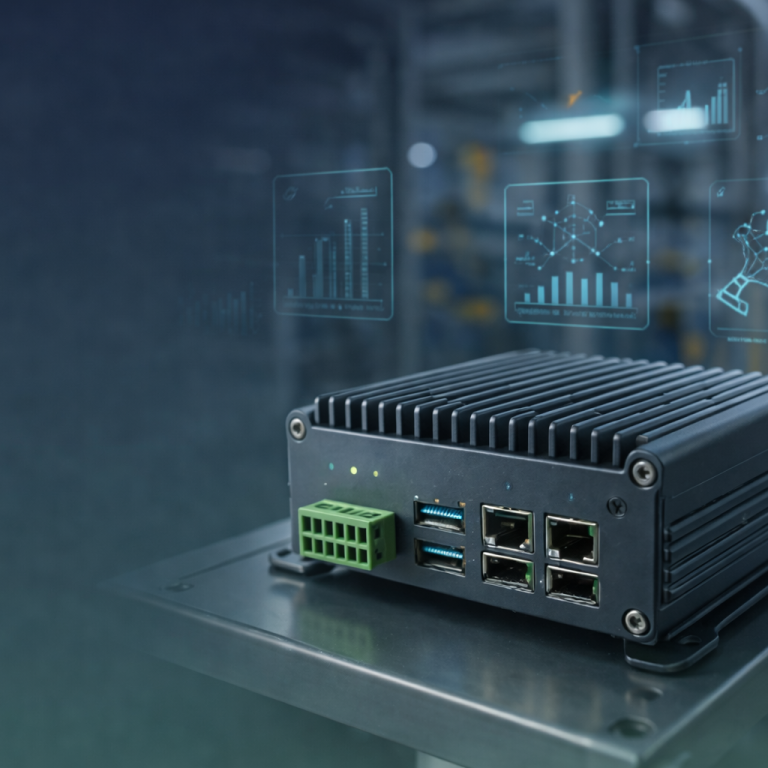
Industrial Edge Systems
Development of edge computing devices
Custom edge hardware and embedded software for industrial monitoring, local inference, data acquisition, and reliable on-site operation.
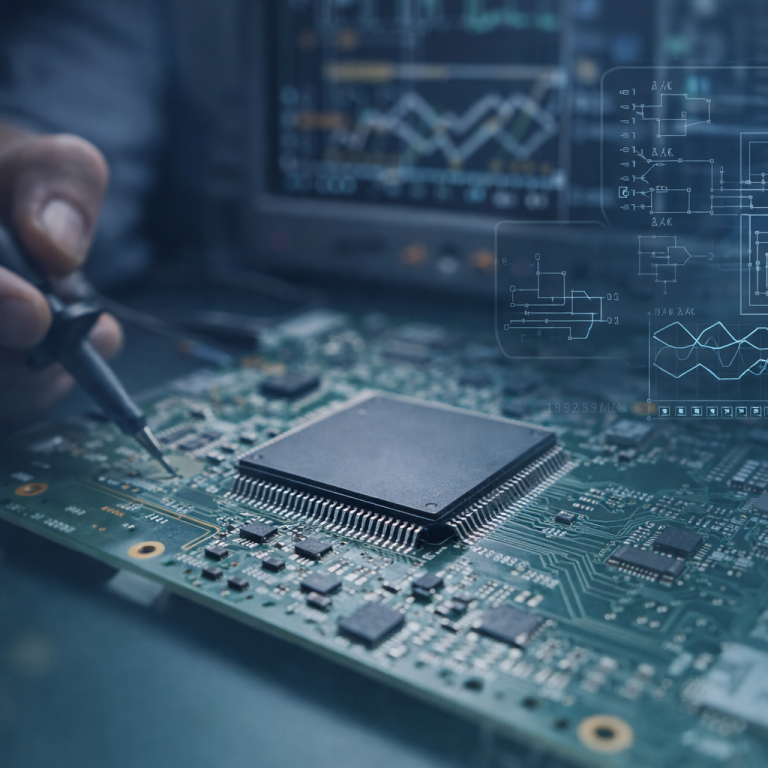
Hardware Development
FPGA and PCB design
FPGA architecture, RTL implementation, PCB layout, and test workflows for custom electronics where performance, timing, and signal integrity matter.
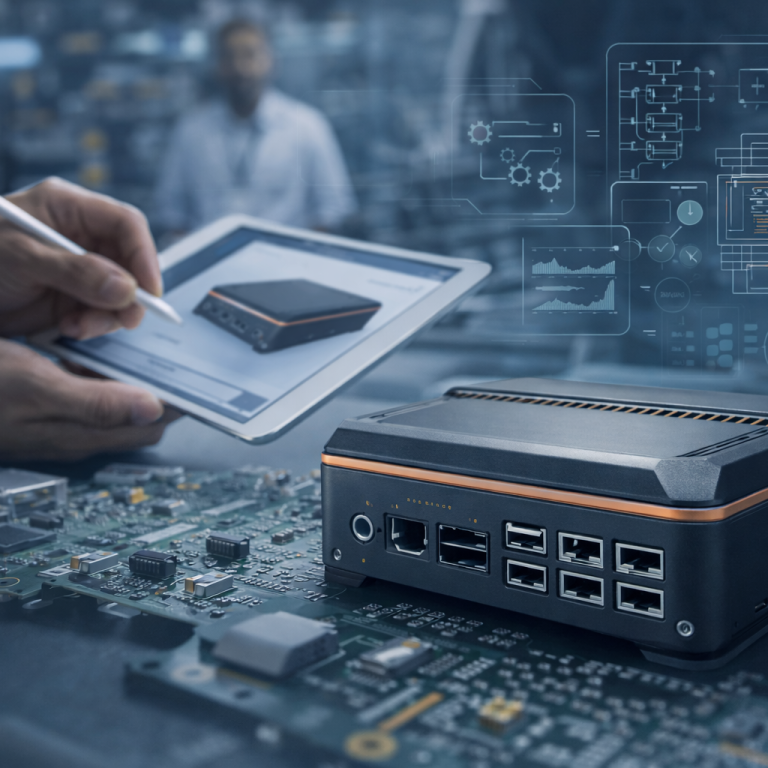
Product Realization
High-end OEM product realization
End-to-end realization of customer-specific products, covering concept refinement, hardware and software integration, prototype validation, and transfer toward scalable production.
Engineering Approach
Architecture decisions shaped for efficient industrial edge deployment.
CPU / GPU :
Flexible, but expensive to operationalize
Excellent for general computing and large-scale parallel workloads, yet often penalized by higher power draw and control overhead in embedded deployments.
Instruction-set DSA :
More efficient, but constrained by data movement
Improves AI efficiency, but architectural bottlenecks remain around data transfer and software ecosystem dependence.
Reconfigurable Dataflow DSA : Preferred architecture for industrial edge AI
Data is mapped directly across compute and memory resources, reducing redundant load/store movement and improving latency, utilization, and energy efficiency.
Data-driven execution
Compute modules stay active when data is ready, supporting consistent performance on constrained hardware.
Compiler-defined scheduling
Workloads are prepared in software ahead of runtime, reducing hardware complexity and improving deployment control.
Industrial deployment fit
Better aligned with on-site operating limits, deterministic workflows, and long-lived industrial systems.
Capabilities
End-to-end engineering from accelerator design to deployment tooling.
Accelerator Architecture
SoC architecture, multi-engine memory hierarchy, AI engine design, and streaming optimizations for sustained execution.
Industrial Edge Modules
Deployment-grade edge modules designed to host compiled AI workloads reliably in field conditions.
Compiler and Runtime
Translates models into executable accelerator programs, schedules resources, and records task timing for analysis.
Model Integration DSL
Introduces an abstraction layer between operators and hardware register configuration to simplify deployment engineering.
Quantization Toolkit
Supports asymmetric 8-bit, 16-bit, and mixed quantization to balance model accuracy with deployment efficiency.
Performance Visibility
Visualizes hardware occupancy and runtime bottlenecks, enabling iterative optimization of compiled industrial AI workloads.
Delivery Workflow
From industrial AI workload to field-ready execution.
01
Assess
Analyze monitoring, anomaly detection, or maintenance workloads and identify the dominant compute and dataflow patterns.
02
Compile
Convert model graphs into quantized representations and accelerator executables for the selected target platform.
03
Optimize
Fuse operators, tune memory-sensitive layers, and align data to parallel units to improve efficiency and utilization.
04
Deploy
Run inference on the edge module with runtime profiling, validation, and iterative tuning for production readiness.
-0.19 ms
Latency reduction after coordinated model, compiler, and runtime optimizations.
+1.66%
Improvement in hardware resource utilization under the optimized configuration.
94.97%
Share of compute dominated by INT8 matrix operations in the analyzed industrial AI workload.
Benchmark Results